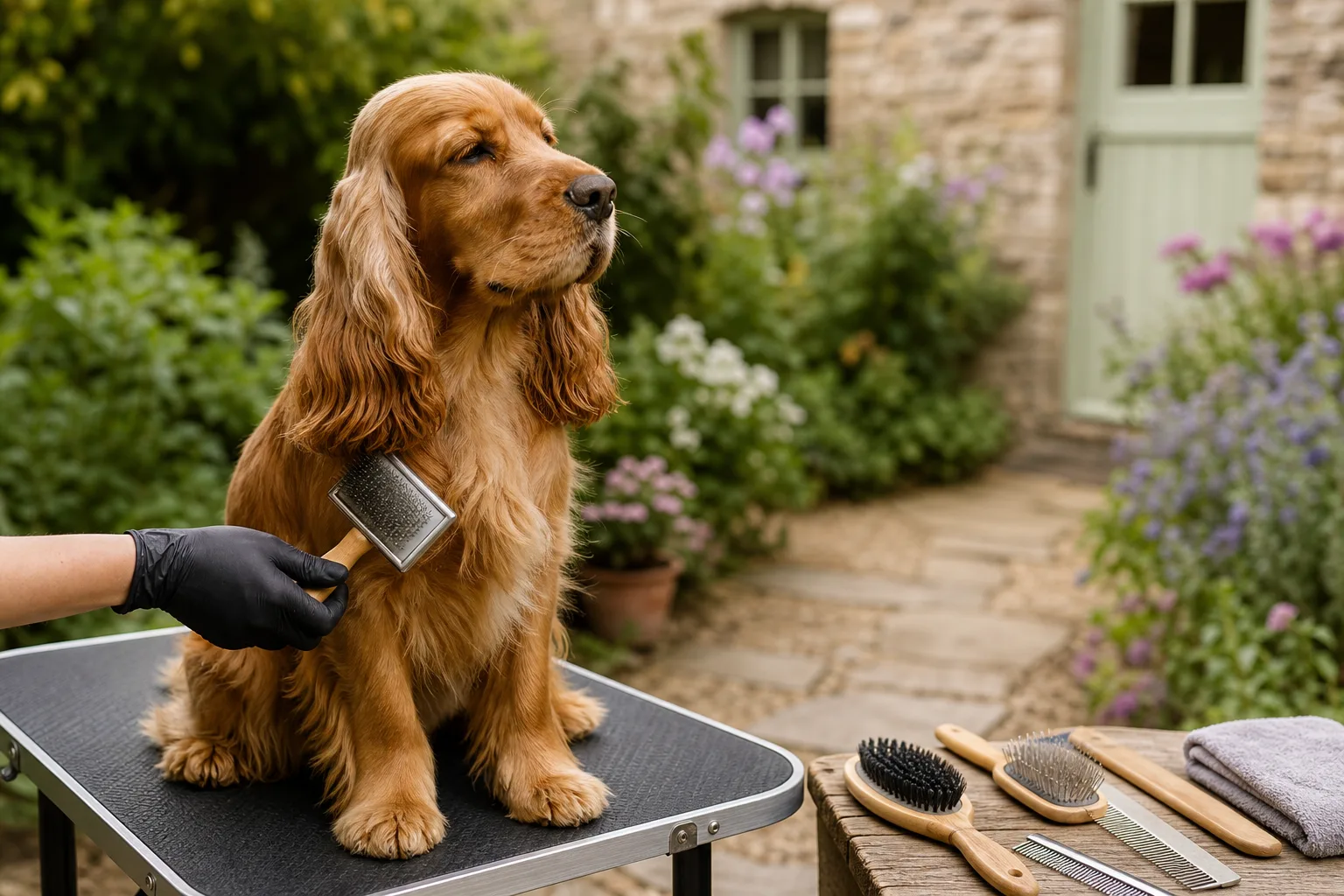
Answer: Yes — daily brushing should be tailored to your dog’s coat. A five-minute, consistent routine keeps coats healthy, reduces mats and makes professional grooming easier.
Introduction
Every dog benefits from daily handling and a short brushing session, but the tools and technique depend on coat type. This guide gives clear, practical routines you can do at home in five to fifteen minutes. It’s written for UK dog owners — whether you live in Kettering, Barton Seagrave or nearby villages — and links to further reading on starting puppies and how often different coats need professional care.
Start with the basics (applies to all coats)
- Check the dog’s skin quickly for redness, lumps, fleas, sores or broken hair. If you find anything concerning, contact your vet.
- Use short sessions: 3–10 minutes every day is better than one long, stressful hour.
- Have treats, praise and a calm space; a kitchen table or a dry garden patch in fine weather works well.
- Keep tools clean and dry. Replace worn brushes — worn pins or bristles snag the coat and can be uncomfortable.
Tools you’ll commonly need
- Slicker brush: good for tangles and many coat types.
- Bristle brush: for smooth and short coats to distribute natural oils.
- Pin brush: for longer, silky coats.
- Wide-tooth metal comb: for checking undercoats and finding mats.
- De-matting tool or mat splitter: only for light work and ideally used by a trained groomer.
- Undercoat rake: for double-coated breeds to remove loose hair.
If you’re unsure which tool suits your dog, ask your local groomer in Barton Seagrave or a pet shop — or read our guide on how often different dog coats should be groomed for more context: /blog/how-often-should-different-dog-coats-be-groomed.
Short/smooth coats (e.g. Labrador, Beagle)
Tools: soft bristle brush or rubber curry mitt.
Daily routine (5 minutes):
- Start with a quick whole-body stroke to remove loose dust and hair — use short, gentle strokes in the direction of growth.
- Run the brush along legs, chest and under the tail where dirt gathers.
- Use a rubber mitt or damp cloth for a glossy finish and to pick up loose hair.
- Finish with a quick comb-through the tail and ears to check for debris or irritation.
Why this helps: Short coats shed constantly; daily brushing removes loose hair and spreads skin oils. It’s also a useful welfare check.
Double-coated breeds (e.g. Border Collie, German Shepherd)
Tools: undercoat rake, slicker brush, wide-tooth comb.
Daily routine (5–10 minutes):
- Use an undercoat rake briefly over the main coat (not pressing hard) to lift loose undercoat.
- Follow with a slicker brush to catch shorter tangles.
- Comb through areas that mat easily: behind the ears, under the armpits, the tail and the rear thighs.
- Check for wet patches and clear debris after walks.
Seasonal note: These coats shed heavily in spring and often again in autumn. Daily sessions during shed seasons reduce house hair and keep your dog comfortable — if you need more detailed timing, our frequency guide is useful: /blog/how-often-should-different-dog-coats-be-groomed.
Curly or wool coats (e.g. Poodle, Bichon)
Tools: slicker brush, metal comb, possibly a grooming rake for long fleece.
Daily routine (10–15 minutes):
- Gently tease the coat with a slicker brush, working small areas at a time to avoid missed knots.
- Use a metal comb to check that the brush has reached the skin and to catch any small tangles.
- Pay attention to the face, paws and tail — these areas mat quickly.
- Keep hair around eyes and mouth tidy with careful combing; if trimming is needed, see a professional groomer rather than using scissors at home.
Important: Curly and wool coats need daily attention to prevent tight mats which can become painful. If you find dense mats, do not cut them yourself; a qualified groomer should assess and remove them safely.
Long, silky coats (e.g. Yorkshire Terrier, Afghan Hound)
Tools: pin brush, metal comb, detangling spray (only use gentle, pet-safe products).
Daily routine (10–15 minutes):
- Work from the tips back towards the skin in sections to avoid creating new tangles.
- Hold the hair above any knot to avoid pulling on the skin while you brush.
- Use a comb to ensure you’re getting down to the undercoat, especially on the ears and feathered legs.
- Consider a light detangler on very long coats, following product instructions and avoiding skin contact.
Safety reminder: Never use human hair products. If your dog’s coat becomes matted close to the skin, book a groomer rather than attempting to cut or shave at home.
Wiry or textured coats (e.g. terriers)
Tools: slicker or bristle brush and a stripping comb or stone (stripping should be done by a groomer).
Daily routine (5–10 minutes):
- Use a bristle or slicker brush to remove surface dirt and loose hair.
- Learn hand-stripping techniques only from a qualified groomer — home stripping can ruin the coat texture.
- Check whiskers and face daily; trim only with owner-safe clippers under groomer guidance.
When to stop and call a professional or a vet
- Fur mats sit close to the skin and feel tight — book a professional groomer. De-matting at home often causes skin damage.
- Persistent redness, hair loss, sores, strange odour, or signs of pain — seek veterinary advice.
- If your dog becomes aggressive or fearful during handling, a qualified groomer can introduce handling gradually; our article on preparing puppies for their first appointment is a helpful start: /blog/puppy-first-groom.
Short, practical weekly plan
- Daily: 5–15 minutes as above.
- Weekly: Full comb-through, nails check and ear inspection.
- Monthly: Brush out the whole coat thoroughly and note any changes.
- Seasonal: More frequent brushing for double coats during sheds.
Tips to keep brushing calm and consistent
- Make it predictable: same place, same time of day.
- Keep sessions short and offer a small treat reward.
- Give praise and a gentle stroke after each minute of good behaviour.
- If your dog is uncomfortable, stop and try again later — slow progress is better than forcing compliance.
What to avoid at home
- Don’t use scissors to cut out mats — this risks cutting the skin.
- Don’t clip or chemically treat your dog unless trained to do so.
- Don’t use worn brushes or broken pins; they can scratch the skin.
Local support in Kettering and Barton Seagrave
If you need hands-on help, a local groomer can show you the correct brush holds and techniques for your dog’s coat type. Regular professional appointments combined with daily home care make the difference between a coat that’s comfortable and one that requires corrective work.
Conclusion
Daily brushing tailored to coat type is a small habit that prevents discomfort, reduces matting and helps you spot skin problems early. Use the right tools, keep sessions brief and calm, and call a professional groomer or vet when you encounter mats or skin issues. For puppies and a beginner-friendly approach, see our guide to starting young dogs with grooming: /blog/puppy-first-groom, and for a broader timetable of professional visits, consult /blog/how-often-should-different-dog-coats-be-groomed.
Related grooming guides
Frequently asked questions
How long should a daily brushing session be?
Aim for 3–15 minutes depending on coat type: 3–5 minutes for short coats, 10–15 minutes for long, curly or heavily double-coated dogs. Short, consistent sessions work best.
What if I find a mat while brushing?
Do not cut a mat out yourself. For small, loose tangles you can gently tease with a comb, but for dense mats book a professional groomer — attempting to remove close-to-skin mats at home risks injury.
Can I use the same brush on different dogs?
You can, but clean the brush between dogs to avoid transferring dirt or parasites. Ideally keep a separate set for your pet if others are present in the household.
When should I see a vet about a skin problem?
See a vet promptly for constant scratching, hair loss, redness, sores, swelling or if the dog appears in pain — these can indicate allergies, infection or parasites.
How do I introduce brushing to a nervous dog?
Go slowly: handle paws and flanks briefly each day, pair with treats, use short sessions and stop before the dog becomes anxious. A groomer can provide desensitisation techniques if needed.