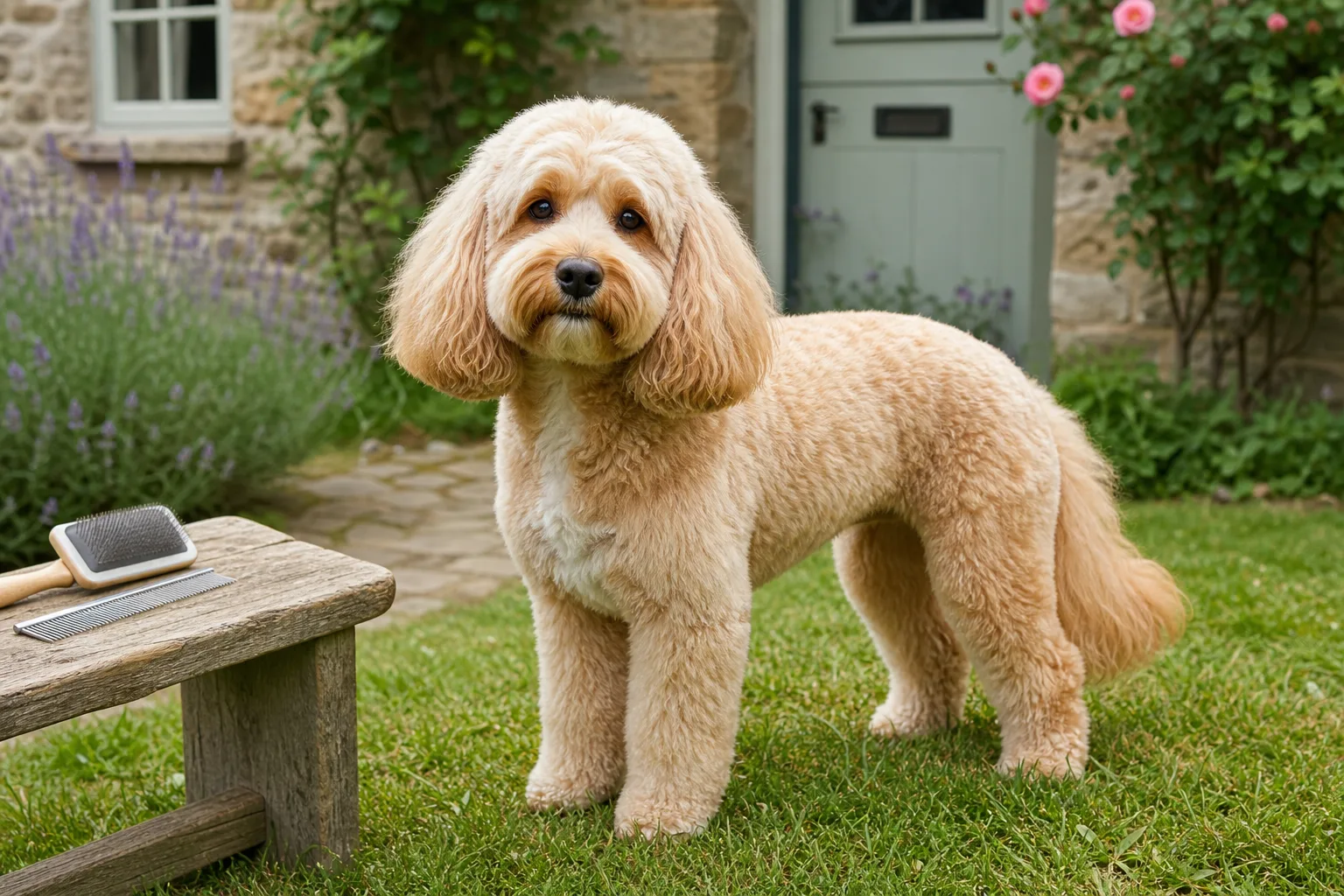
Short answer
Poodle and Poodle‑cross coats are single‑layer, curly or woolly and need regular brushing, careful bathing and professional clipping every 6–12 weeks depending on the style. Left unmaintained they matt close to the skin and can cause discomfort — prevention with the right tools and a steady routine is the key.
Introduction
Poodles and the many Poodle crosses (cockapoo, cavapoo, labradoodle, schnoodle and others) are popular in the UK because of their looks and lower shedding. Their coats vary widely: some are tight, resilient curls; others are soft, loose waves or woolly, teddy‑type fur. This article helps you recognise coat types, choose a practical clip, and keep your dog comfortable between salon visits — with tips suitable for owners in Kettering and surrounding Barton Seagrave.
Understanding Poodle‑type coats
- Structure: most Poodle‑type coats are single‑layer (no thick undercoat). Hair grows continuously and can form tight ringlets, loose curls or a soft woolly texture. Those textures influence how easily the coat tangles and how it should be styled.
- Common problems: tangles, mats close to the skin, damp‑smell in creased areas, and irritation from trapped debris. Mats pull on the skin and are uncomfortable — they should be removed safely by a groomer rather than cut at random.
- Coat care needs: regular de‑tangling, appropriate bathing and a professional clip tailored to the dog’s lifestyle.
Common Poodle‑cross coat types (and what they mean for upkeep)
- Tight curl (Poodle‑like)
- Needs daily to every‑other‑day brushing to stop mats forming.
- Benefits from a shorter pet clip if the owner wants lower maintenance.
- Loose curl / wavy (many cavapoos, cockapoos)
- Easier to brush than tight curls but still needs regular attention, especially behind ears and at the tail base.
- Woolly / fleece (some first‑generation doodles)
- Feels plush and soft but mats easily; frequent comb‑throughs and professional dematting may be needed.
- Straight or mixed coats (some crosses inherit straighter hair)
- May shed more and behave differently; a groomer will advise a suitable routine.
If you’re unsure of your dog’s coat, a quick visit to a qualified groomer will give a clear plan for home care and salon frequency.
Popular clip styles and who they suit
- Puppy clip (or puppy trim): short, even length across the body with a neat face and paw trim. Good for active pets and first grooms. (See our guide to preparing puppies: [/blog/puppy-first-groom].)
- Pet/utility clip: practical short length over the body with rounded head and tail finish. Lower maintenance and comfortable for most family dogs.
- Teddy trim: medium length all over with a rounded face — extremely popular for Poodle‑crosses for the ‘soft toy’ look. Requires regular brushing to avoid matting.
- Sporting/trimmed clip: shorter on the body with longer furnishings on legs and face; smart but needs more upkeep at home.
- Full show/Continental: specialised and high‑maintenance, usually reserved for show dogs — not practical for most pet owners.
Choose a clip that matches your dog’s activity level, your time for home care and the local climate — in the UK a very short summer shave isn't necessary for most dogs and can expose skin to sun and chill.
Home maintenance: brushing, bathing and products
Daily to weekly home care keeps salon visits manageable:
- Brushing: use tools that match the coat. For tight curls a slicker brush and a wide‑tooth comb are helpful; for woolly coats a comb finishes any brush work. See our tool suggestions: [/blog/choosing-the-right-brush-and-comb-for-your-dogs-coat].
- Brushing routine: short sessions (5–15 minutes) several times a week; focus on ears, underarms, behind legs and tail base — common places for mats.
- Bathing: avoid over‑bathing. Most Poodle‑types benefit from a bath every 4–8 weeks depending on activity and coat condition — read about how often to bathe and signs your dog needs a wash here: [/blog/bathing-frequency-signs-your-dog-needs-a-wash]. Use a dog shampoo formulated for sensitive skin and rinse thoroughly.
- Conditioning and finishing: leave‑ins and conditioning sprays can make brushing easier and reduce static, but only use products designed for dogs. For safe product use see: [/blog/conditioning-sprays-and-leave-ins-when-and-how-to-use-them-safely].
Safety notes: never use human products on dogs, avoid over‑bathing which strips natural oils, and never attempt aggressive dematting with scissors at home — this risks skin injury.
Salon needs: what a professional groomer will do
When you book a groom expect the salon to:
- Assess coat type and skin health before work begins.
- Use clippers and scissors appropriate to the chosen style and the dog’s coat.
- Demat carefully: skilled groomers use carding, thinning tools or clippers rather than cutting mats at the skin level.
- Clean ears, trim pads and shape the face/feet for safety and hygiene.
- Recommend a rebooking interval — commonly 6–12 weeks for most Poodle clips.
At our calm one‑to‑one salon in Barton Seagrave, Kettering, we find many owners appreciate a short demonstration of home brushing technique during the appointment — it’s a quick way to make daily care simpler and reduce stress for dog and owner.
Preparing for the salon and what to tell your groomer
- Be honest about home brushing — if a dog has severe mats the groomer needs time and may book a dematting session.
- Mention any skin issues, recent medication, or known anxieties.
- Bring up activity: dogs that swim or love mud may need different clips.
- If the dog is a puppy, read our puppy preparation guide for a calm first experience: [/blog/puppy-first-groom].
When to see a groomer or a vet
- Book a groomer when you notice persistent matting, strong odour between grooms, or heavy build‑up around ears and pads.
- See a vet if you find bald patches, severe redness, sores, sudden coat changes or if the dog shows signs of pain during brushing or handling. Groomers can flag these signs but cannot diagnose — a vet should assess medical issues.
Practical tips for Kettering owners
- Aim for a salon with one‑to‑one appointments if your dog is nervous — it reduces stress and avoids crowded waiting areas.
- Local weather matters: after wet British winters increase brushing and towel‑drying sessions to prevent damp matting.
- Keep a short list of at‑home tools and a small supply of dog‑safe conditioning spray for quick touch‑ups between salons (see our tools guide for safe handling: [/blog/coat-care-tools-every-owner-should-own-what-they-do-and-how-to-use-them-safely]).
Conclusion
Poodle and Poodle‑cross coats are beautiful but need steady, specific care. Match a realistic clip to your lifestyle, establish a short brushing routine and rely on a qualified groomer for dematting and professional trims. With sensible home care and the right salon partnership your dog will be comfortable, mat‑free and ready for walks around Barton Seagrave and beyond.
Related grooming guides
Frequently asked questions
How often should I take my Poodle‑cross to the salon?
Most Poodle‑type coats suit a professional groom every 6–12 weeks. Busy or show styles need shorter gaps; practical pet clips can stretch to 10–12 weeks if you maintain a regular brushing routine at home.
Can I safely remove mats at home?
Small, loose tangles can be eased with a detangling spray and a wide‑tooth comb, but for close mats leave removal to a qualified groomer to avoid cutting the skin. See our safe detangling guidance before a salon visit.
What brush is best for a curly Poodle coat?
A medium‑fine slicker brush plus a wide‑tooth comb for finishing is a safe, effective combo. Match tool choice to coat texture — our brush guide explains which tools suit which coats: /blog/choosing-the-right-brush-and-comb-for-your-dogs-coat.
Is shaving my Poodle‑cross in summer a good idea?
Avoid shaving to the skin unless advised by a vet; it removes natural sun and temperature protection. A shorter pet clip is usually enough to keep your dog comfortable while protecting skin.
What signs should prompt a vet visit after grooming?
See a vet if you notice sore or bleeding skin, hair loss, severe redness, pus, sudden flaking or your dog showing pain when touched — groomers can flag concerns but cannot replace veterinary assessment.