Short answer
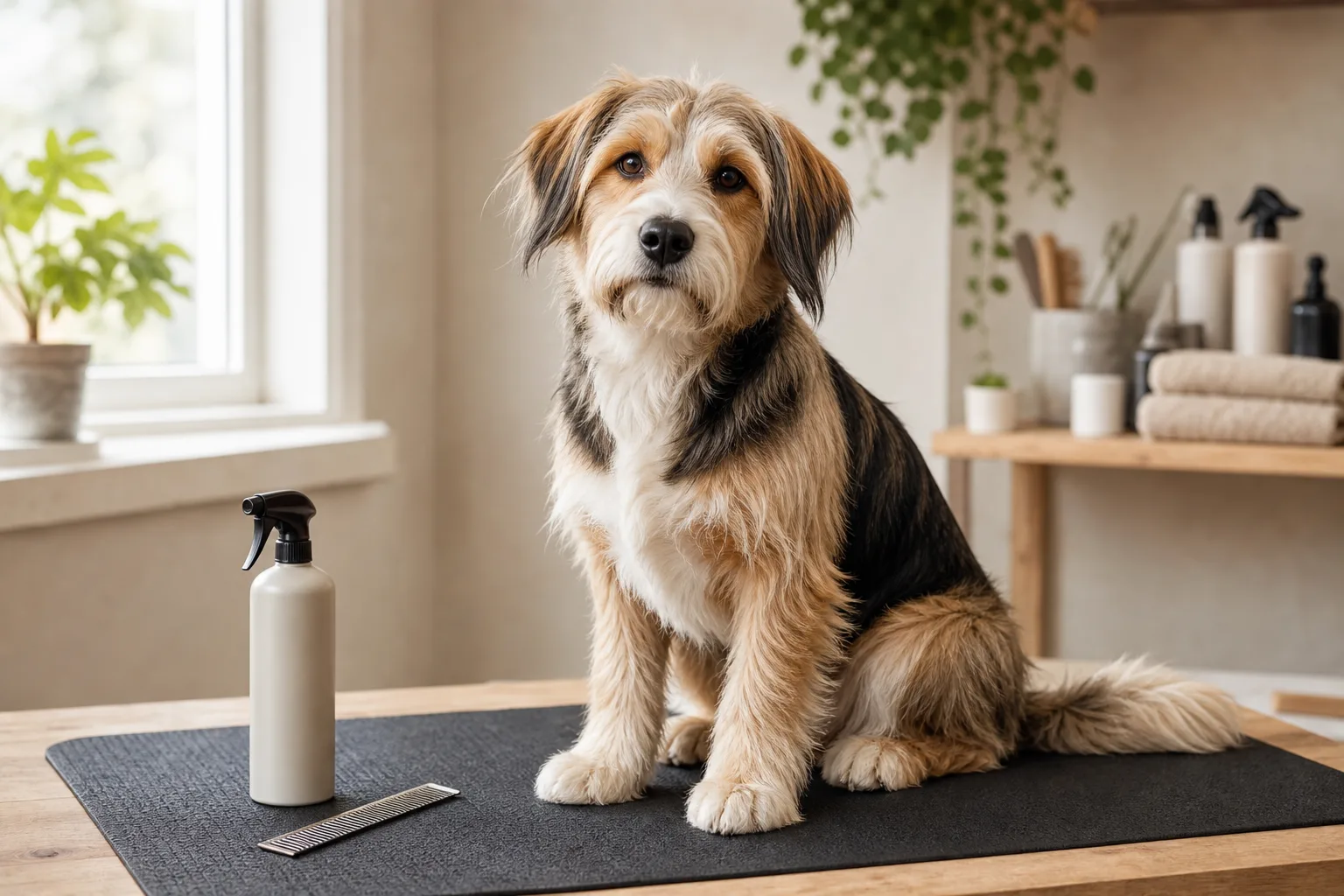
Conditioning sprays and leave‑ins add slip, reduce static and help protect your dog’s coat between baths — when used correctly. They’re not a cure for skin disease and should be chosen and applied to suit the coat type and any skin sensitivity.
Introduction
Many owners find leave‑in conditioners and conditioning sprays invaluable for everyday coat care: they make brushing easier, add manageability, help keep long or curly coats tidy and can refresh a dog between salon visits. Used incorrectly, though, they can build up, irritate sensitive skin or mask underlying problems. This guide explains what these products do, when to use them, how to choose one safely and the practical steps for application.
What are conditioning sprays and leave‑ins?
- Conditioning sprays: typically water‑based solutions that add slip, reduce static, and sometimes contain light moisturisers or detangling agents. They are quick to apply and rinse‑free.
- Leave‑in conditioners: often thicker in formulation and intended to remain in the coat, providing longer‑lasting conditioning, anti‑frizz and protection from environmental dirt.
Both kinds are designed for finishing and maintenance rather than deep cleansing. They differ from rinsing conditioners used during a bath, which are washed out after a short time.
When to use them (and when not to)
Use conditioning sprays or leave‑ins when:
- You need gentle detangling before brushing, especially on long or curly coats.
- Your dog has light dryness or static after a bath, or in cold, dry months.
- You want to refresh a coat between professional grooms or after a walk in wet weather.
- You’re preparing your dog for a salon visit and want calm, manageable coat (see our guidance on safe detangling before a salon visit: /blog/safe-detangling-before-a-salon-visit-gentle-at-home-techniques-for-owners).
Avoid or pause use if:
- The dog has active skin inflammation, open sores, scabs, or unexplained hair loss — see a vet first.
- The product contains known irritants for your dog (see our list of products to avoid on sensitive coats: /blog/products-to-avoid-on-sensitive-coats-ingredients-and-items-that-commonly-cause).
- You notice product build‑up, greasiness or a persistent smell after repeated use.
Choosing the right product
- Match it to the coat type
- Short coats: light, water‑based sprays that add sheen and reduce static. Heavy leave‑ins can look greasy.
- Double coats: avoid heavy oils; choose a light detangling spray and use sparingly on the topcoat. Never deliberately leave heavy conditioners in the undercoat — brushing and light sprays are usually enough. See our guide on brushing routines for coat types: /blog/everyday-brushing-routines-for-different-coat-types.
- Long, curly or corded coats: leave‑ins that provide slip and humidity control help detangling and reduce matting. Look for products labelled for detangling or conditioning long coats.
- Check ingredients
- Prefer short ingredient lists and avoid unnecessary fragrances and dyes for sensitive dogs.
- Humectants (like glycerin) add moisture but can attract dirt if overused.
- Silicone‑based ingredients (dimethicone, cyclomethicone) give immediate slip and shine but may build up — use intermittently.
- Natural oils (jojoba, sweet almond) can be good in small amounts but may weigh fine coats down or attract debris.
- Look for clear labelling
- Product labelled for dogs rather than humans is best. Human leave‑ins often have fragrances or ingredients unsuitable for canine skin.
Practical step‑by‑step: how to apply safely
- Read the label and do a patch test
- Spray a small amount on a patch of flank or inner thigh, wait 24–48 hours and check for redness, flaking, itching or hair loss.
- Prepare the dog
- Work in a calm space. For a nervous or young dog, short sessions are best — build positive association with treats and a relaxed voice. If you’re preparing a puppy for grooming, follow tips in our puppy first groom article: /blog/puppy-first-groom.
- Apply correctly
- Hold the bottle 20–30 cm away and mist evenly for sprays. For leave‑ins with a nozzle or pump, apply a small amount to your hands (or directly into long coat sections) and distribute.
- Avoid the face, inner ears, genitals, and any broken skin. Never spray directly into the eyes.
- Work it in
- Use an appropriate comb or brush for the coat (see Choosing the Right Brush and Comb: /blog/choosing-the-right-brush-and-comb-for-your-dogs-coat). Start at the tips or ends and work up to the roots to remove tangles gently.
- Finish and observe
- Let the coat air dry if damp. Check skin the following day for any reaction. If you see persistent irritation, stop use and consult your vet or a qualified groomer.
Frequency and quantity
- Less is often more. A light spritz after a bath or before brushing is enough for most dogs.
- Avoid daily heavy applications unless a product is specifically formulated for daily use. Overuse can lead to build‑up, greasy fur and matting at the roots.
Safety notes and common mistakes
- Never rely on conditioning sprays to treat itchy, flaky or inflamed skin. These are symptoms that should be assessed by a vet.
- Do not use products meant for other species (e.g. horses) without checking ingredients and suitability for dogs.
- Avoid scented human hair products; they often contain essential oils or perfumes that can irritate dogs.
- Be cautious with ‘detangling’ claims — some products simply mask tangles rather than loosening them safely. Matting needs careful work; if a mat is close to the skin or widespread, see a qualified groomer rather than force‑brushing.
Storage and shelf life
- Store in a cool, dry place and discard once the manufacturer’s expiry or if the product smells sour or separates. Keep out of reach of dogs and children.
When to ask a professional
- If your dog has chronic dry skin, redness, flaking, or persistent rubbing, book a vet appointment — skin conditions can have medical causes.
- For persistent matting, heavy undercoat work or if you’re unsure how much product to use for a coat type, consult a qualified groomer. Our one‑to‑one approach at the salon means we can recommend specific products and show safe application for your dog’s coat and behaviour.
Practical examples for typical situations
- After a wet walk in Kettering: use a light conditioning spray once the coat is towel‑dried to reduce tangles and speed drying in cooler weather.
- Between grooms for a long‑haired companion: a weekly leave‑in used sparingly on ends will help prevent small mats forming and make brushing quicker.
- For an elderly dog with thin coat: choose a gentle, fragrance‑free spray and patch test; apply infrequently to avoid weighing the coat down.
Conclusion
Conditioning sprays and leave‑ins are useful tools in a home grooming kit when chosen for the coat type and used correctly. They make brushing easier, reduce static and help keep coats manageable between salon visits. Always patch test, follow label directions, avoid treating medical issues with cosmetic products, and ask a vet or qualified groomer if you’re uncertain. If you’re preparing for a professional groom or need a demo, bring your dog along to the salon for one‑to‑one guidance and product recommendations tailored to your dog’s needs.
Related grooming guides
Frequently asked questions
Can I use human leave‑in conditioner on my dog?
No — human products often contain fragrances, essential oils and ingredients unsuitable for canine skin. Use products labelled for dogs and always patch test first.
How often should I use a conditioning spray?
Usually only after baths or as needed before brushing. For most dogs a light spritz once or twice a week is enough; avoid daily heavy use to prevent build‑up.
Will conditioning spray stop my dog from matting?
Conditioning spray helps reduce tangles and makes brushing easier, but it won’t fix existing tight mats. Large or skin‑close mats need a groomer’s care.
My dog has sensitive skin — what should I look for?
Choose fragrance‑free, short‑ingredient formulas designed for sensitive skin, patch test for 48 hours and stop use if irritation appears. Consult your vet for persistent issues.
Can I use leave‑ins on a double coat?
Use sparingly. Light sprays are usually fine on the topcoat, but avoid heavy leave‑ins that can stick the undercoat and encourage matting; seek groomer advice for heavy undercoat work.