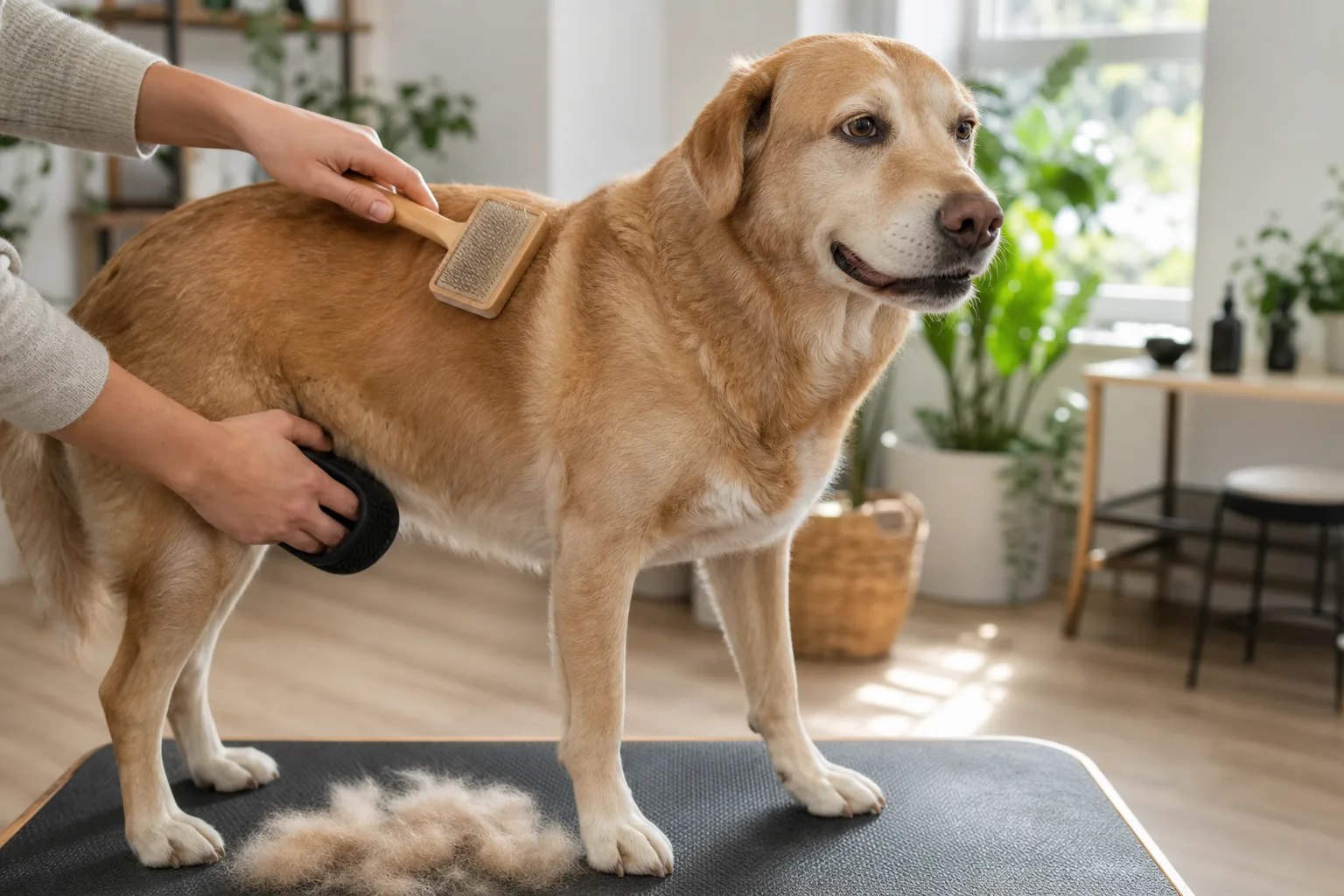
Short answer: yes — you can noticeably reduce loose hair from heavy shedding with regular, gentle coat care, targeted brushes, sensible bathing, good nutrition and small changes at home. These methods won’t stop natural seasonal moults, but they keep loose hair under control and improve your dog’s comfort.
Introduction
Shedding is normal for all dogs, but ‘heavy shedding’ can make life messy and uncomfortable for both dog and owner. In the UK’s temperate climate (Barton Seagrave and Kettering included) most dogs moult more noticeably in spring and autumn when their coat adjusts to changing daylight and temperature. The guidance below focuses on non-invasive, practical steps owners can use at home to reduce loose hair, protect the skin and coat, and limit the amount of fur in the house.
Why dogs shed and what counts as "heavy"
- Normal shedding: a steady loss of single hairs and seasonal moults twice a year for many double-coated breeds.
- Heavy or excessive shedding: large clumps, constant fluff around the home, or sudden increases in hair loss — especially if accompanied by itching, sore skin or bald patches — may need a professional assessment.
If you’re unsure whether your dog’s shedding is normal for their breed and coat type, compare with breed guidance and consider asking a groomer or vet for a quick check.
H2: Gentle at-home routines that make the biggest difference
Small, consistent routines reduce loose hair far more effectively than occasional, intense efforts.
H3: Daily and weekly habits
- Daily: quick, short strokes with a brush appropriate to your dog’s coat (10–60 seconds) to catch loose undercoat before it settles. This is especially effective during seasonal moults.
- Two to three times a week: a more thorough brush-through to remove undercoat, tangles and dead hair.
- Weekly: check for mats, skin changes (redness, flakes, bumps) and monitor coat condition so you spot problems early.
For brush selection and coat-specific guidance, see our Choosing the Right Brush and Comb for Your Dog’s Coat and Everyday Brushing Routines for Different Coat Types. These explain which tools suit short, double, long, curly and wiry coats and how long each session should take. Use them together: the right tool plus a regular schedule gives the best results.
H2: Brushing — tools and technique (gentle and effective)
Choose tools that match the coat:
- Short coats: rubber curry brush or soft bristle brush to lift loose hairs and distribute natural oils.
- Double coats: deshedding tool (used gently), slicker brush and stainless-steel comb for the undercoat. Avoid aggressive blade-like grooming at home; if heavy undercoat removal is needed, ask a professional groomer.
- Long or curly coats: slicker brush and wide-tooth comb; work in small sections to avoid pulling.
Technique tips:
- Work with the hair growth — brush in the direction the coat lies.
- Use short, calm sessions and praise; stop if your dog shows signs of stress.
- Hold long-coated areas gently while you brush to prevent tugging the skin.
- Remove hair from the brush frequently to keep it effective.
If you’re unsure which tool to use or how to approach sensitive areas such as the chest, armpits or tail, our guide on Choosing the Right Brush and Comb for Your Dog’s Coat is a helpful starting point.
H2: Bathing and coat care products — gentle choices
Bathing can reduce loose hair by lifting dead hairs and loosening undercoat, but over-bathing strips natural oils and can increase skin irritation.
- Frequency: follow coat-specific guidance in our Bathing Frequency article. Most dogs do not need frequent baths; use a gentle, dog-formulated shampoo and rinse thoroughly.
- Conditioners and finishing sprays: light conditioners or detanglers can help long or wiry coats lie flat, reducing the hair that sheds into the home. Use products marked safe for dogs and follow label instructions.
- Drying: towel-dry first, then use a pet-safe dryer on a low, warm setting if your dog tolerates it — drying fully prevents skin problems that can worsen shedding.
Never use human shampoos, essential oils, or household chemicals on your dog without guidance from a vet or qualified groomer.
H2: Nutrition, hydration and supplements
A healthy coat needs balanced nutrition and adequate hydration:
- Diet: feeds with the right balance of protein, fats and micronutrients support a resilient coat. If you’re considering a diet change, transition slowly and consult your vet if your dog has a medical condition.
- Hydration: skin and coat depend on good hydration — always provide fresh water.
- Supplements: omega-3 fatty acids (EPA/DHA) can help coat condition for some dogs. Only use supplements recommended by your vet; quality and dosage matter.
If you notice dull coat, flaky skin, or a sudden increase in shedding, ask your vet to check for underlying issues such as allergies, parasites, hormonal imbalances or nutritional deficits.
H2: Home and household steps to reduce visible hair
Practical changes in the home minimise loose hair around the house and make daily life easier:
- Vacuuming: a routine with a good pet-capable vacuum reduces settled hair; vacuum floors, upholstery and car seats weekly during heavy shedding.
- Lint rollers and rubber squeegees: quick and cheap for clothing and fabric.
- Bedding: use washable covers and launder weekly; a removable cover means you can wash loose hair away easily.
- Designated grooming area: groom in a hallway or garden (weather permitting) to contain hair and simplify clean-up.
H2: When to involve a qualified groomer or a vet
See a qualified groomer (or book a calm, one-to-one session) when:
- Your dog has heavy undercoat that you can’t manage safely at home.
- There are stubborn mats and tangles in long or curly coats (mats should be professionally handled rather than cut at home).
- You need professional deshedding services — a groomer will use appropriate tools and techniques safely.
See a vet when:
- Shedding is sudden or dramatic, accompanied by skin sores, intense itch, redness, scabs, bald patches or lethargy.
- Your dog is losing weight, has poor appetite, or other health changes.
Never attempt to use scissors or clippers on mats or skin without experience — this risks cuts and injury. If in doubt, book an assessment with a qualified groomer or veterinary practice.
H2: Practical weekly plan for managing heavy shedding
A simple, repeatable plan that fits busy schedules:
- Daily (1–2 minutes): quick brush to catch loose hair. Keep sessions calm and reward your dog.
- Twice weekly (5–15 minutes): focused brushing or combing for undercoat removal; check skin and ears.
- Weekly: wipe down furniture, launder bedding and vacuum high-hair areas.
- Monthly: bath if needed (follow bathing-frequency guidance), or earlier if your groomer recommends a professional deshed.
- Seasonally (spring and autumn): increase brushing frequency and consider a professional groom if your dog’s undercoat is particularly heavy.
H2: Final practical notes for Kettering and Barton Seagrave owners
Kettering’s temperate seasons mean many dogs have clear spring and autumn moults. A calm, regular routine will reduce loose hair in the home and keep your dog comfortable. If you’d like hands-on guidance, a one-to-one session with a local groomer can show you brush technique and tool selection tailored to your dog’s coat type.
Conclusion
Heavy shedding need not rule your home. With the right tools, a calm routine, careful bathing and attention to diet and skin health, you can substantially reduce loose hair without resorting to harsh or risky techniques. Always involve a vet if shedding is sudden or linked to other symptoms, and use a qualified groomer for deshedding and mat removal. Small, consistent actions deliver the biggest improvements — and they help your dog feel better, too.
Related grooming guides
Frequently asked questions
How often should I brush my dog during a seasonal moult?
Increase brushing to daily short sessions during spring and autumn. Aim for a quick 1–2 minute groom each day and a longer 10–15 minute session two or three times a week to remove undercoat.
Will bathing reduce shedding?
A gentle bath can help lift loose hairs, but don’t over-bathe. Use a dog-safe shampoo, rinse thoroughly and follow coat-specific frequency guidance to avoid drying the skin.
Are deshedding tools safe to use at home?
Deshedding tools can be safe if used correctly for your coat type. Choose a blade-free tool and use gentle strokes; if you're unsure, ask a qualified groomer to demonstrate to avoid damaging the coat or skin.
When should I see a vet about my dog’s shedding?
See a vet if shedding is sudden, severe or accompanied by bald patches, sores, intense itching, or other health changes — these can signal medical issues requiring diagnosis.
Can diet changes reduce heavy shedding?
A balanced diet and good hydration support healthy skin and coat. Discuss any major diet change or supplements (such as omega-3s) with your vet to ensure safety and correct dosing.