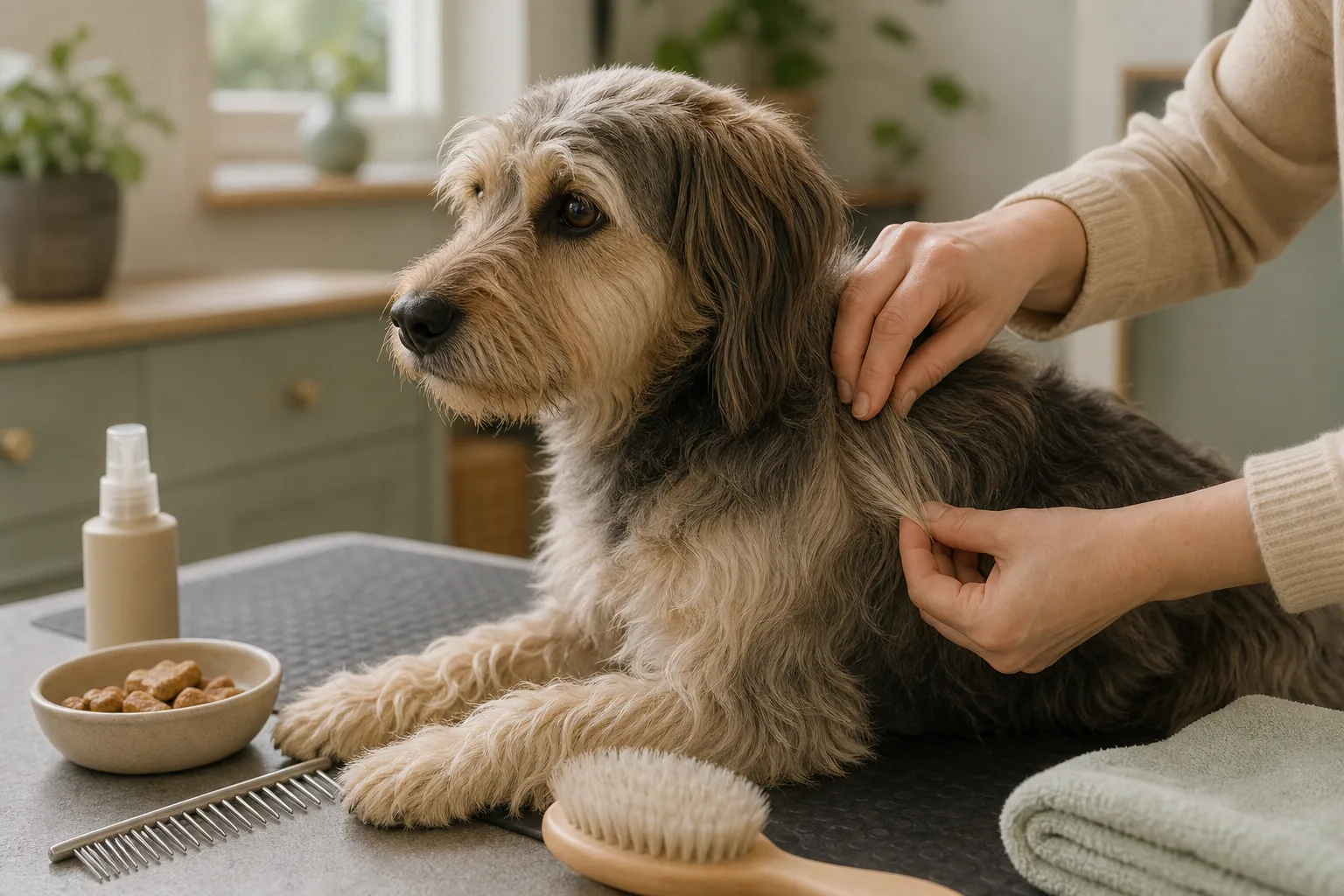
Answer: Yes — with the right tools, short sessions, and gentleness you can safely ease loose tangles at home so your dog arrives calmer and the groom is quicker. Stop and seek a qualified groomer or vet if the coat is deeply matted, the dog is in pain, or there are skin problems.
Introduction
A little gentle detangling at home can make a professional groom quicker and less stressful for your dog. This guide shows practical, safe techniques you can use the day before or the morning of a salon visit in Barton Seagrave, Kettering. The aim is to remove loose knots and surface tangles without causing pain or damaging the coat — not to remove heavy matting. If you’re unsure about the condition of the coat, err on the side of caution and ask your groomer for advice.
Why detangle before a salon visit?
- Makes the salon visit quicker and less stressful for your dog.
- Reduces the need for mat‑removal tools at the salon, which can be stressful for anxious dogs.
- Helps your groomer start on a calm, clean coat and focus on the finished style.
Know when to stop and seek professional help
Do not attempt to tackle deep mats at home. Book an appointment with a qualified groomer if you find:
- Tight, felted mats that hide skin underneath.
- Areas where the dog yelps, flinches or shows clear discomfort when you touch the coat.
- Broken skin, bleeding, scabs, or signs of infection (redness, pus, strong smell).
- Heavy flea, tick or lice infestations.
If you see skin lesions, sudden hair loss, or a coat that seems stuck to the skin, contact your vet before grooming.
Tools you’ll need
Match tools to coat type — see our Choosing the Right Brush and Comb for Your Dog’s Coat for specifics. A general starter kit:
- Slicker brush (for long and curly coats).
- Wide‑tooth comb (works well through longer coats to find tangles).
- Fine‑tooth comb or metal comb with rotating teeth for finishing.
- A pair of blunt‑tipped thinning scissors only if you have training (otherwise don’t use scissors).
- Detangling spray or a very mild conditioning spray (or dilute a small amount of a dog conditioner with water in a spray bottle).
- Soft towel and treats.
Preparing your dog
- Choose a calm time with no distractions. A quiet corner at home or a familiar room in Barton Seagrave works well.
- Keep sessions short (5–10 minutes). Several short sessions are better than one long, stressful attempt.
- Use positive reinforcement: small, tasty treats and calm praise. Make the session feel like a game rather than a chore.
- Have someone help for nervous dogs so you can gently steady them without forcing.
Step‑by‑step detangling routine
- Check the coat and skin briefly. Look for red areas, crusts, fleas or broken skin. If you see anything worrying, stop and consult a vet or your groomer.
- Begin with a quick brush over the whole coat to remove loose hairs and surface dirt. This gives you an overview of problem areas.
- Work on one small area at a time — the chest, behind the ears, under the collar, behind the elbows and the tail base are common tangle zones.
- Hold the coat at the base, close to the skin, between finger and thumb to reduce pulling on the skin. This stabilises the area and is less painful.
- Use your fingers to gently tease apart loose tangles. If a tangle resists, apply a light mist of water or diluted conditioner (test a small area first for skin reaction) and try again.
- Work from the ends of the hair towards the skin — never start at the roots. Use a wide‑tooth comb to draw out loosened tangles, then follow with a slicker brush to smooth.
- If a tangle is small and loosens with gentle finger work and combing, continue. If it remains tight after a minute or two, stop and leave it for the salon.
- Finish with a calm stroke over the whole coat and a reward.
Techniques by coat type
Long, silky coats (for example, many spaniels and collie types)
- Use fingers to separate clumps first, then a wide‑tooth comb. Hold the coat at the base when combing.
- Avoid over‑brushing wet hair as it stretches; lightly dampened hair responds best.
Curly and woolly coats (poodles and Bichon types)
- These coats mat close to the skin. Never pull — if you find dense felted areas, book a professional dematting.
- Use a slicker gently on the surface and a comb to check loosening progress.
Double coats (e.g., Labrador, Siberian husky)
- Focus on loose undercoat. A de‑shedding tool may help remove dead hair but use it gently and avoid the skin with repeated strokes.
- Detangling products are rarely needed; routine brushing prevents larger tangles.
Wiry coats (terriers)
- Use a firm bristle brush and a comb. Work in the direction of hair growth and address tangles at the ends first.
Puppies
- Short, frequent sessions and lots of praise build good handling behaviour. See our Puppy’s first groom: a calm beginning for more on early positive experiences. Avoid force or long sessions; keep it playful.
Products: what to use and what to avoid
- Use products labelled for dogs only. Human conditioners can upset a dog’s skin pH.
- A light detangling spray or diluted conditioner can help loosen knots — spray sparingly and avoid the dog’s face and ears.
- Do not use household oils, human hair serums or alcohol‑based products.
- Avoid home use of dematting hooks, electric dematting tools or scissors unless you’re trained — these can cut skin and make problems worse.
Pacing and managing stress
- Watch your dog’s body language: yawning, lip‑licking and turning away are signs of stress. Stop before stress escalates.
- If your dog becomes tense, give a break and restart with a favourite treat or a short walk.
- Use calm, low tones. Sharp commands and rushed handling make tangles harder to address.
If the coat is heavily tangled or matted
- Book a salon appointment rather than attempting to shave or cut at home. A qualified groomer can assess whether detangling, clipping or a specialist approach is safest.
- Heavily matted areas may hide skin irritation, sores or parasites — these need professional assessment.
What your groomer will appreciate
- Tell the salon about any sensitive spots, recent vet visits or medication.
- If you carried out light detangling at home, mention which areas you worked on so the groomer can focus where needed.
- If you decide not to detangle at home because of a matting risk, don’t worry — professional groomers are trained to handle these situations safely.
Local and ongoing care
Regular home care reduces the need for stressful detangling. Follow routines suited to your dog’s coat — our Everyday brushing routines for different coat types explains how often and how long to brush each type. For questions about how often to book professional visits, see How often should different dog coats be groomed? — groomers in Kettering, including ourselves in Barton Seagrave, can advise on an ongoing plan tailored to your dog.
Conclusion
Safe at‑home detangling is about short, gentle sessions, the right tools and knowing your limits. Light, careful work will help your dog arrive at the salon calmer and make the groom quicker. For tight, felted mats, skin issues or signs of pain, stop and let a qualified groomer or your vet assess the dog — avoiding harm is the most important part of coat care.
Related grooming guides
Frequently asked questions
How long should an at‑home detangling session last?
Keep sessions short — 5–10 minutes — and repeat several times a day if needed. Short sessions reduce stress and help your dog stay cooperative.
Can I use human conditioner or oil to loosen tangles?
No. Use products made for dogs or dilute a small amount of a dog conditioner with water. Human products can irritate dog skin and change coat texture.
What if the tangle is near the skin and very tight?
Stop immediately. Tight, felted mats should be assessed by a qualified groomer — they may need specialist tools or a shave to avoid skin damage.
How can I keep my dog calm during detangling?
Use short sessions, plenty of treats, calm praise and gentle handling. Work in a familiar room, pause when the dog shows stress signals, and make sessions positive.
Should I detangle my puppy before their first professional groom?
Light, very gentle detangling and handling helps puppies get used to grooming. For more on early preparation, see our Puppy’s first groom: a calm beginning.