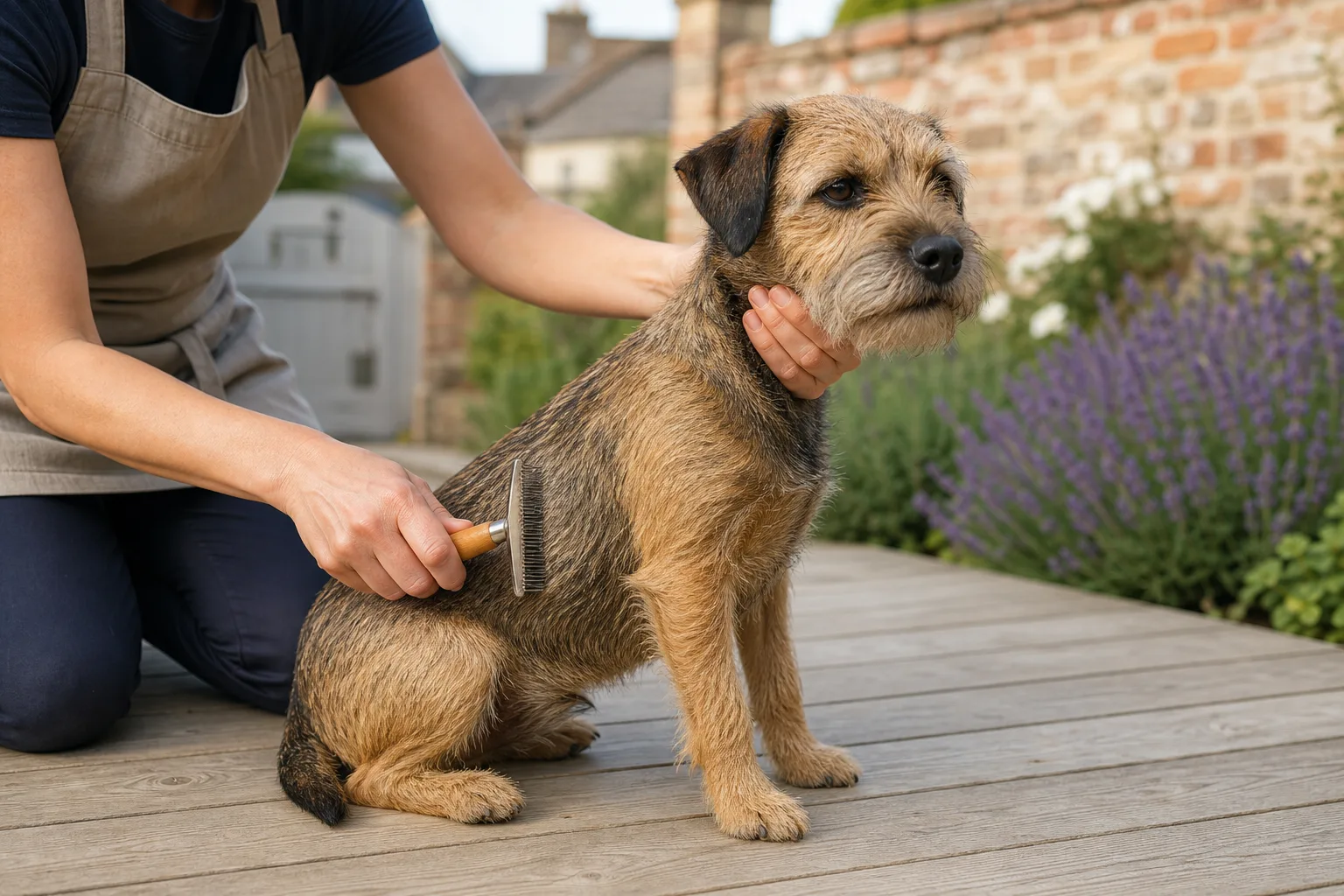
Short answer: keep wiry and broken terrier coats tidy and healthy by using regular, gentle hand‑stripping or careful clipping, a consistent brushing and tidying routine, skin‑friendly bathing only when needed, and the right tools — and call a qualified groomer or vet if you spot skin problems or heavy matting.
Introduction
Wiry and "broken" coats are common across many terrier breeds and terrier‑type crossbreeds. They have a coarse, protective outer hair and often a shorter, softer underlayer. This texture gives the breed its characteristic look, but it needs different care from long, curly or double coats. The right approach preserves texture, prevents matting and keeps your dog comfortable — whether you groom at home in Barton Seagrave or book a professional visit in Kettering.
Why this coat needs a specialised approach
- Hand‑stripping removes dead, loose hairs from the root, keeping the coat harsh and weatherproof. Clipping simply cuts hair and often softens the coat over time.
- "Broken" coats (a mix of harsh and soft hairs) need selective removal of dead hairs so the harsh hairs can re‑emerge.
- Over‑brushing with the wrong tools, or too‑frequent harsh bathing, can damage texture or irritate the skin.
Understand the structure before you begin
- Outer (harsh) coat: firm, wiry hairs that protect against bramble and weather.
- Undercoat: softer, sometimes shorter, can be sparse or patchy in terrier types.
- Broken coat: a mix of both; needs targeted work rather than blanket clipping.
If you notice redness, scabs, flaking, sudden hair loss or persistent greasiness, stop grooming and ask a vet or qualified groomer to assess the skin. These are non‑diagnostic signs that need professional attention.
Core techniques for maintaining texture
Hand‑stripping (preferred for many terriers)
What it is
Hand‑stripping is the selective removal of dead outer hairs by pulling them out by the root or using a stripping tool. Doing this regularly allows new harsh hairs to grow and keeps the coat textured.
How to do it safely at home
- Start with a clean, dry coat. If the dog is dirty, a light bath and full dry is best — avoid over‑bathing. See our bathing frequency guide for signs your dog needs a wash. (/blog/bathing-frequency-signs-your-dog-needs-a-wash)
- Work on small areas at a time. Hold the hair between thumb and forefinger and pull gently in the direction of growth; you should remove only dead hairs. If hairs don’t come free with light pressure, stop — do not force them. A stripping knife or stone can help under guidance.
- Use short sessions and keep your dog calm: praise, treats and breaks. For puppies, introduce handling slowly to build positive associations (see our puppy first groom article). (/blog/puppy-first-groom)
- Never strip irritated or inflamed skin. If the skin looks sore or the dog is uncomfortable, consult a vet or experienced groomer.
Notes and cautions
- Hand‑stripping is a learned skill. A qualified groomer can demonstrate safe technique — it’s often the difference between a tidy coat and accidental skin damage.
- For show dogs, timing and technique are critical; leave to a specialist.
Clipping and scissor tidying (when hand‑stripping isn’t an option)
- Clipping is acceptable for pet dogs where you prefer a lower‑maintenance solution. Expect the coat to soften over time.
- Use wide‑tooth combs and the correct clipper blade/guard; remove no more than necessary — leave the outer coat length on terriers where possible.
- Use scissors only for minor tidying around the face, ears and feet, and only if you are confident. Avoid home body‑scissoring that risks uneven results or injury.
A practical at‑home routine (weekly to monthly)
Weekly
- Brushing: use a suitable tool for wiry coats (see our guide to brushes and combs) — gentle, short sessions to remove loose hair and check skin. (/blog/choosing-the-right-brush-and-comb-for-your-dogs-coat)
- Quick tidy: check around eyes, mouth and paws; remove small loose hairs with fingers or a comb.
Every 2–6 weeks
- Hand‑strip small areas if you’re confident; otherwise book a groomer for a strip.
- Light bath only if needed (grease, dirt or smell). Use a dog‑specific, gentle shampoo and avoid heavy conditioning that softens texture; refer to our conditioning spray guide for safe choices. (/blog/conditioning-sprays-and-leave-ins-when-and-how-to-use-them)
Monthly to every 3 months
- Professional tidy or full hand‑strip depending on how quickly the coat breaks and the dog’s activity. Frequency varies by individual coat and lifestyle — see our guide on how often coats should be groomed. (/blog/how-often-should-different-dog-coats-be-groomed)
Dealing with broken coats — practical steps
- Identify the problem areas: flanks, saddle, beard and legs often show mixed hair growth.
- Targeted stripping: remove the dead soft hairs so the harsh hairs can come through. Work in short, frequent sessions rather than attempting a full overhaul at home.
- Patience: it can take several cycles of stripping and growth for the desired texture to return. Avoid heavy clipping that removes the outer coat permanently.
Tools and products to rely on (and those to avoid)
- Useful tools: stripping knife/stone (use after instruction), stripping rake, coarse rubber mitt for finish, wide‑tooth comb and a firm bristle brush for finishing. Our guide to coat‑care tools explains uses and safe handling. (/blog/coat-care-tools-every-owner-should-own-what-they-do-and-how-to-use-them-safely)
- Brushes: choose tools matched to wiry coats — see the brushes and combs article. (/blog/choosing-the-right-brush-and-comb-for-your-dogs-coat)
- Products: select dog‑specific shampoos; avoid human conditioners and heavy silicone leave‑ins that will soften texture. Use lightweight conditioning sprays only when needed. (/blog/conditioning-sprays-and-leave-ins-when-and-how-to-use-them)
- Products to avoid: harsh human detergents, alcohol‑heavy sprays or anything that causes residue on the coat. If the dog has sensitive skin, consult the "products to avoid" guidance and a vet.
Dealing with mats and tangles safely
- For surface tangles, try gentle detangling with short sessions and an appropriate comb; follow our safe detangling guide before a salon visit if mats are present. (/blog/safe-detangling-before-a-salon-visit-gentle-at-home-techniques-for-owners)
- For tight mats close to the skin, see a qualified groomer rather than attempting to cut or pull — cutting risks skin injury and breaks the coat’s protective structure.
When to get professional help or see a vet
Contact a qualified groomer if:
- You want full hand‑stripping and don’t have the training.
- The coat is heavily matted or the dog is stressed by home grooming.
- You need breed‑specific styling or a show finish.
See a vet if:
- There is persistent redness, hair loss, scabs, intense scratching or unusual smell.
- The coat has suddenly changed texture or pattern — these can be signs of skin conditions, allergies or other medical issues.
Conclusion
Wiry and broken terrier coats reward patient, specific care. Use gentle, regular home maintenance to remove loose hairs and keep the coat tidy, and choose hand‑stripping (or skilled professional stripping) to preserve the characteristic texture. Learn the safe techniques, match tools and products to the coat, and call in a qualified groomer or your vet when skin or matting problems go beyond simple at‑home care. If you’re in the Kettering area and unsure where to start, ask a local professional to show you the basics — a short demonstration is often the fastest way to gain confidence and keep your terrier comfortable and looking its best.
Related grooming guides
Frequently asked questions
What is the difference between hand‑stripping and clipping for a terrier coat?
Hand‑stripping removes dead outer hairs by the root to preserve harsh texture and colour; clipping cuts hair and tends to soften the coat over time. Hand‑stripping is preferred to maintain a traditional terrier look, but clipping is acceptable for easier maintenance.
How often should I hand‑strip my terrier at home?
Many terrier coats benefit from light maintenance every 4–8 weeks and a fuller strip every 8–12 weeks, depending on hair growth and activity. If you’re new to stripping, ask a qualified groomer to demonstrate before you try at home.
Can I use a conditioner on a wiry coat?
Avoid heavy, silicone‑rich conditioners that soften wiry hair. Use lightweight, dog‑specific conditioning sprays sparingly and only when the coat seems dry or after a bath; guidance on safe leave‑ins can help you choose the right product. (/blog/conditioning-sprays-and-leave-ins-when-and-how-to-use-them)
What tools should every owner of a wiry‑coated dog have?
Essential items include a stripping tool or stone (for trained owners), a stripping rake, a wide‑tooth comb, and a firm bristle or bristle/fibre brush. Our tools guide explains what each does and how to use them safely. (/blog/coat-care-tools-every-owner-should-own-what-they-do-and-how-to-use-them-safely)
When must I see a vet instead of trying to groom at home?
See a vet if you notice redness, open sores, sudden hair loss, intense itching, foul smell or other signs of skin disease. Stop grooming those areas and seek professional assessment before continuing.