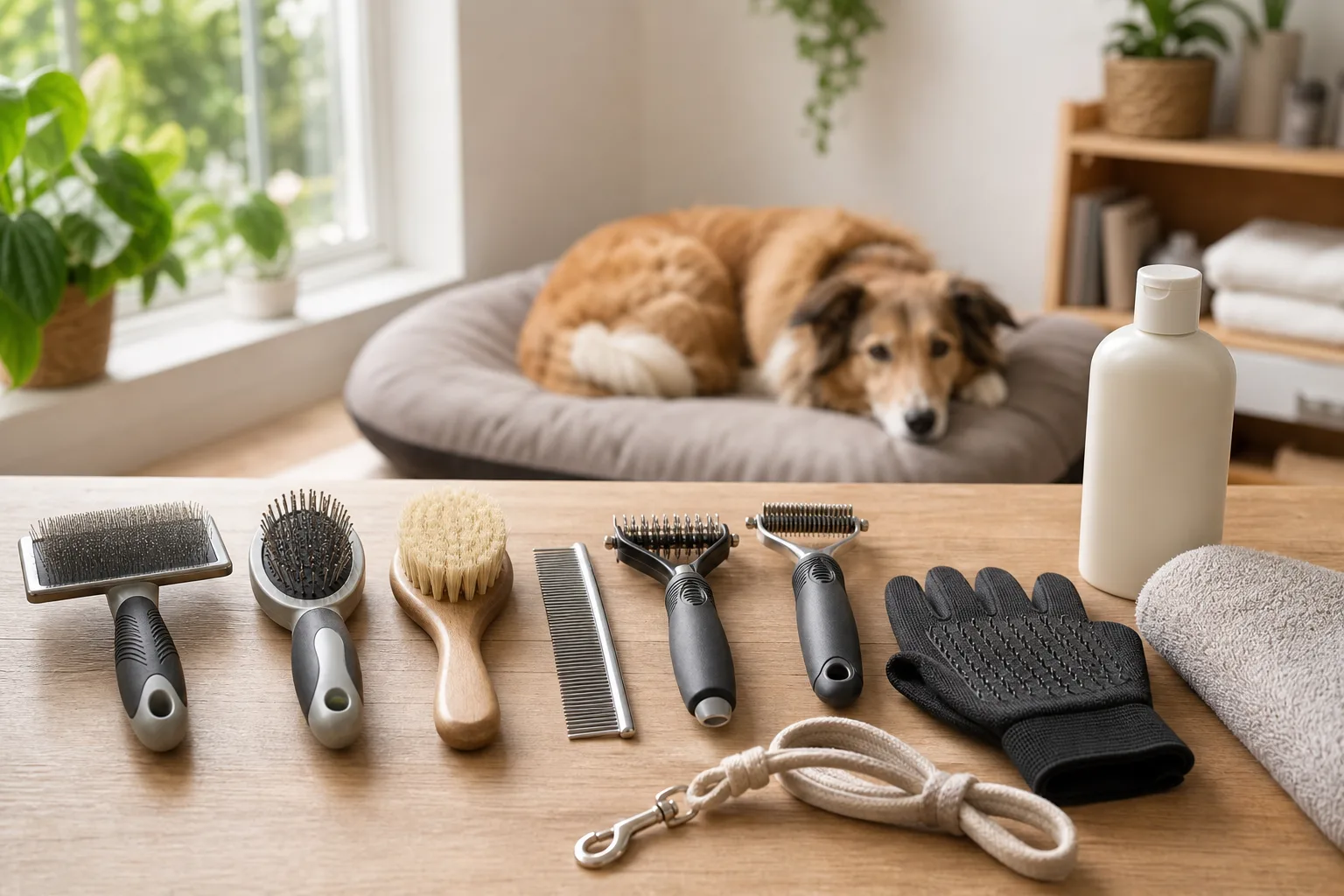
Answer: Every owner should have a small, versatile kit — a slicker brush, a bristle or pin brush, a stainless-steel comb, an undercoat/deshedding tool for double coats, a gentle dematting tool for tangles, and a rubber grooming glove — plus a towel and a calm plan for use.
Introduction
Keeping your dog’s coat healthy starts with the right tools and calm, consistent handling. Whether you live in Barton Seagrave, Kettering or elsewhere in the UK, having the essentials at home saves time, reduces discomfort for your dog and helps you spot skin or coat problems early. Below is a practical checklist, how to use each item safely, and clear guidance on when to stop and seek professional help.
H2: The essential coat-care toolkit (what to buy and why)
Use this as a starter kit for most dogs. Coat type matters — for help matching tools to your dog's coat, see our Choosing the Right Brush and Comb article. (/blog/choosing-the-right-brush-and-comb-for-your-dogs-coat)
- Slicker brush
- What it is: A small rectangular pad with fine, slightly flexible wire pins.
- Best for: Long, curly or wiry coats and for removing loose hair and small tangles in many coat types.
- How to use: Hold the pad flat to the coat and use short, gentle strokes in the direction of hair growth. Start on less sensitive areas (back) before the tail, legs and chest. If you meet resistance, stop and work the area with a comb or detangler rather than force the pins.
- Pin brush and/or bristle brush
- What they are: Pin brushes are for longer coats; bristle brushes smooth and distribute natural oils on short coats.
- Best for: Pin brushes for long/curly coats; bristle brushes for short, glossy coats.
- How to use: Use the pin brush to lift and separate hair, then finish with the bristle brush in long, gentle strokes to polish the coat.
- Stainless-steel comb
- What it is: A fine-toothed and wide-toothed comb in a single tool.
- Best for: Checking for small tangles, finding mats you missed and for finishing work around ears and face.
- How to use: Work from wide to fine teeth, holding the base of the hair near the skin to avoid pulling. Comb gently and patiently.
- Undercoat rake or deshedding tool
- What it is: A tool with longer teeth designed to pull loose undercoat without cutting topcoat.
- Best for: Double-coated breeds (e.g. huskies, golden retrievers) during seasonal shedding.
- How to use: Use light pressure and short strokes along the direction of hair growth. Do not overwork one area — aim for a few strokes and then move on. For severe shedding, read Managing Heavy Shedding for gentle strategies. (/blog/managing-heavy-shedding-gentle-strategies-that-reduce-loose-hair)
- Dematting tool or comb with rounded teeth
- What it is: Specifically made to loosen and remove small mats.
- Best for: Tangled areas on long or curly coats (behind legs, under collars, behind the ears).
- How to use: Work small sections, hold the base of the mat near the skin with one hand to protect the skin, and gently tease the mat apart with short, small movements. If a mat is tight or close to the skin, stop and book a groomer — attempting to cut or pull it at home can damage skin and cause pain.
- Rubber grooming glove or curry
- What it is: A flexible glove with small nubs that removes loose hair and gently stimulates skin oils.
- Best for: Short coats, nervous dogs and finishing after a bath.
- How to use: Use in circular motions on damp or dry coat. This is often the calmest tool to use with anxious dogs.
- Microfibre towel and non-slip mat
- What they are: Essential for drying and keeping grooming sessions comfortable and safe.
- Best for: After washing or when removing loose hair from wet coats.
- How to use: Pat, don’t rub, to reduce tangles. Always place your dog on a non-slip surface during grooming.
H2: Useful extras (when and why to add them)
- Detangling spray or leave-in conditioner: Choose a dog-specific product and patch test a small area first. Use sparingly to help glide a comb through tangles.
- Small rounded-end grooming scissors: Keep for trimming stray hairs in safe, low-risk areas only (e.g. tidying feet). Never use scissors near skin unless you are trained.
- Soft muzzle or calming aids: Only with guidance from your vet or a behaviourist; never use as a substitute for gentle handling.
H2: Safe handling and step-by-step brushing routine
A calm approach beats force. Try this simple routine — ideal for owners in Kettering fitting grooming into daily life:
- Create calm: Choose a quiet room at a regular time. Offer a favourite treat or a short walk beforehand so the dog is relaxed.
- Check the skin: Run your hands over the coat for lumps, bumps, or warm spots. If you find redness, open wounds, or persistent scaliness, stop and ask your vet or groomer to assess the dog.
- Start with a rubber glove or slicker on the back and sides to remove loose hair.
- Use the comb to check for small tangles; follow with the appropriate brush for your dog's coat.
- Finish with a bristle brush to smooth the coat.
Tips for safety and comfort
- Always support the skin under any tugged section of hair to reduce pulling.
- Short sessions (5–10 minutes) are better than long ones for anxious dogs.
- Keep tools clean and dry: remove hair after each use, wipe metal parts with a damp cloth and dry thoroughly to prevent rust.
- Replace worn brushes and blades — blunt tools pull hair and irritate skin.
H2: When to call a professional groomer or vet
- Heavy matting that reaches the skin.
- Persistent skin irritation, hair loss or sores under the coat.
- Sudden changes in coat condition (oily, greasy, excessive shedding) — these can indicate underlying health issues and should be checked by your vet.
- If your dog becomes very anxious, fearful or aggressive during grooming. A qualified groomer can use specialist handling and equipment safely.
If you have a puppy, read our guide to preparing for the first professional groom — early positive experiences make a lifetime of grooming easier. (/blog/puppy-first-groom)
H2: Tool care, storage and buying tips
- Buy quality: A good stainless-steel comb or a well-made slicker brush lasts longer and is gentler on the coat.
- Clean weekly: Remove hairs and wipe down. Metal tools can be disinfected with a vet-approved spray if needed, following product instructions.
- Store safely: Keep sharp tools like scissors in a closed box out of reach of children and dogs.
- Replace as needed: If pins are bent, or bristles fall out, it’s time to replace the tool — damaged tools cause discomfort.
H2: Final checklist before you start
- Have treats, towel and water handy.
- Use the right tool for the coat section and go slowly.
- When in doubt — stop. Severe tangles, bleeding, skin issues and behavioural worry are reasons to seek professional care.
Conclusion
A compact, sensible set of tools and calm handling make coat care less stressful for you and kinder for your dog. Match tools to your dog’s coat using our Choosing the Right Brush and Comb guide and build short, regular sessions into your routine — if you’re unsure or the coat is matted, a professional groomer or vet should assess the dog. Regular, gentle maintenance keeps coats healthier and grooming visits calmer for all of us in Kettering and beyond. For daily routines by coat type, see Everyday brushing routines for different coat types. (/blog/everyday-brushing-routines-for-different-coat-types)
Related grooming guides
Frequently asked questions
How often should I brush my dog?
Brush frequency depends on coat type: short coats may need twice-weekly brushing, long or curly coats often daily, and double coats need frequent seasonal attention. Follow a short, calm routine and adjust if you spot tangles or loose undercoat. See our guide on how often different dog coats should be groomed for specifics. (/blog/how-often-should-different-dog-coats-be-groomed)
Can I use human brushes or combs on my dog?
It's best to use tools designed for dogs. Human brushes can have softer bristles or different spacing that won’t remove undercoat or detangle effectively and may irritate skin. Choose a brush matched to your dog’s coat — our Choosing the Right Brush and Comb article can help. (/blog/choosing-the-right-brush-and-comb-for-your-dogs-coat)
What should I do about small mats?
Work gently with a dematting tool or comb, supporting the skin under the mat and using short, patient strokes. Apply a small amount of dog-specific detangler if needed. If the mat is tight, close to skin or covers a large area, stop and book a groomer — removing such mats at home risks skin injury.
How do I keep grooming calm for a nervous dog?
Use short sessions, plenty of praise and high-value treats, begin with the rubber grooming glove or gentle brushing, and keep the environment quiet. If anxiety is severe, consult a qualified groomer or an animal behaviourist for a tailored plan.
When should I see a vet about my dog’s coat?
See a vet if you notice sudden hair loss, persistent itching, sores, flaking, changes in coat texture or any suspicious lumps. These can be signs of medical issues that need professional diagnosis.